

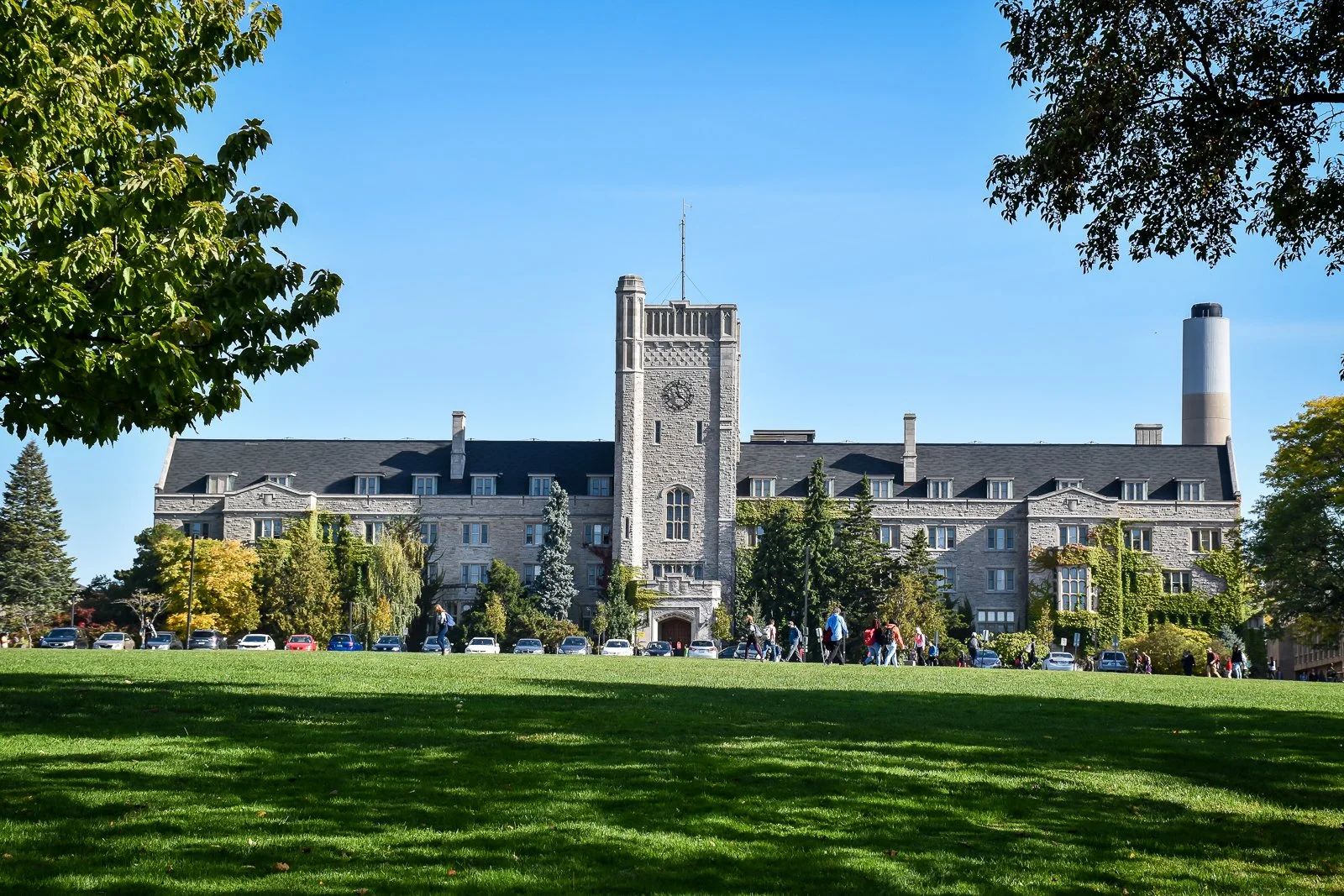
University of Guelph
Challenges & Mitigants:
The mandate required balancing financial objectives with governance constraints, municipal planning considerations, community context, and the University’s long-term mission. Ensuring that value creation did not limit future flexibility was central to the mandate. PaperDolls mitigated these challenges through structured stakeholder engagement, scenario-based financial modelling, and phased development sequencing recommendations. By aligning early with University leadership and municipal stakeholders, and by stress-testing assumptions under various market conditions, we ensured that the strategy remained both financially sound and adaptable to evolving circumstances.
Outcomes:
The resulting strategy defined a roadmap of real estate opportunities incorporating housing, research and innovation space, campus-adjacent community uses, and open space systems. These concepts were organized into near-, mid-, and long-term phases, providing the University with a pipeline for responsible advancement. Several priority precincts have since advanced into deeper planning and engagement, positioning the University to pursue development opportunities capable of generating meaningful alternative revenue while supporting reinvestment in aging assets and future campus initiatives. The strategy established a defensible foundation for future transactions while reinforcing Guelph’s commitments to sustainability, inclusivity, and academic excellence.
Western University

Challenges & Mitigants:
The initiative requires balancing revenue generation objectives with Western’s commitments to academic excellence, sustainability, community stewardship, and long-term operational feasibility. PaperDolls helps the University by ensuring that each opportunity aligns with planning frameworks, market conditions, and internal priorities, while preserving flexibility for future growth. In addition, Western’s position as a public institution can influence market expectations during acquisitions and negotiations. Vendors and counterparties may assume pricing flexibility, increasing the importance of disciplined underwriting and firm negotiation to ensure fair market value and commercially sound terms. PaperDolls mitigates these challenges by drawing on our deep transactional experience to protect institutional value while advancing opportunities that are financially viable, strategically aligned, and executable.
Outcomes:
Several opportunities are advancing through deeper analysis and partner engagement, positioning Western to pursue high-quality development projects capable of generating meaningful alternative revenue to support academic priorities and reinvestment in aging facilities. Through parallel capital optimization and targeted acquisitions, Western is strengthening its land position while establishing a disciplined framework for long-term portfolio evolution.

University of Toronto
Challenges & Mitigants:
The initiative required balancing urgent housing demand with governance discipline, procurement transparency, and long-term institutional flexibility. Structuring partnerships that could deliver high-quality residences while generating alternative revenue (without compromising U of T’s brand, academic mission, or operational control) required rigorous financial modelling and disciplined negotiation. PaperDolls mitigated these challenges through carefully structured procurements, detailed financial analysis of bids, and clear evaluation frameworks. By embedding design, sustainability, and performance criteria into procurement documentation, and by leading negotiations grounded in deep transactional experience, we ensured that advancing proposals met the University's objectives.
Outcomes:
Several strong proposals are advancing through negotiations, which Sonya and Olivia are leading, positioning U of T to deliver sustainable, inclusive, and high-quality student residences while establishing meaningful alternative revenue streams to support its core academic mission. The recapitalization of existing residences is expected to further unlock capital, strengthening the University’s long-term financial resilience.